In the construction and heavy machinery repair industry, steel welding operations account for a large portion of maintenance budgets. Unfortunately, the selection of welding rods (electrodes) is often based on the cheapest price, not on matching the load specifications endured by the metal plate framing.
Two Shielded Metal Arc Welding (SMAW) electrodes most frequently found in almost every mechanical welding workshop are E6013 and E7018. This comprehensive guide will deeply discuss the comparison and where you should ideally apply each of these products so that your iron plates do not crack at the joints.
What Do the Numbers E6013 and E7018 Mean?
The American Welding Society (AWS) classifies these wires with a specific alphanumeric system. Let's break down what this number means.
- The letter E: Indicates that it is an Electrode.
- First Two Numbers (60 or 70): Represents the minimum as-welded Tensile Strength limit in multiples of 1,000 Pounds per Square Inch (PSI). Meaning, E6013 withstands 60,000 PSI and E7018 resists up to 70,000 PSI of tensile load.
- Third Number (1): Indicates the welding position the wire can handle. The number "1" means this electrode is capable of welding in All Positions (Flat, Horizontal, Vertical Up, and Overhead).
- Last Number (3 or 8): Indicates the current characteristics and the chemical material of the outer flux powder coating of the wire.
E6013 Welding Wire Characteristics
The E6013 electrode is designed with a high-grade titanium powder (Rutile) coating. The E6013 wire has become a favorite in most workshops because it produces a very smooth welding arc and minimal splatter. Penetration into the metal plate is fairly shallow.
Priority Applications: Very excellently operated for welding thinner metal plates, fencing fabrication, standard iron tables, machine body repairs that do not bear super-heavy pressure loads.
E7018 Welding Wire Characteristics
The E7018 electrode has a Low-Hydrogen Iron Powder outer coating. This iron powder type coating suppresses hydrogen gas when the arc melts so that the joint has the minimal risk of micro cracks, and produces an extra robust 10,000 PSI extra tensile strength compared to E6013.
Priority Applications: Welding thick plate pipes, crane bridge repairs, heavy equipment chassis / drill arm frames. It is extremely crucial if the factory mandates the joints pass X-Ray Testing level quality inspection.
Summary of Comparative Analysis
| Characteristic | E6013 (Versatile Rutile Type) | E7018 (Heavy Load Low-Hydrogen) |
|---|---|---|
| Tensile Strength | 60,000 psi | 70,000 psi |
| Penetration (Depth Power) | Shallow - Medium | Medium - Deep |
| Metal Preparation & Cleanliness | Tolerant on plates slightly dirty with rust | Requires previously cleaned (ground) steel plate |
| Neatness of Slag Result | Smooth results, slag falls off quickly and by itself | Slow welding system, freezing requires skilled setting |
One warning that is not stated by fake manufacturers: low-hydrogen based 7018 type electrodes are HIGHLY SUSCEPTIBLE to absorbing ambient surrounding air moisture. Often E7018 electrodes must be baked / reheated in a welding oven (Rod Oven) for an average of 2 hours at a temperature of 260 Celsius before the arc is ignited.
Best Recommendations Based on Your Industry Specifications
Choosing 6013 versus 7018 is a tradeoff between the comfort of the welding technician versus pure structural integrity.
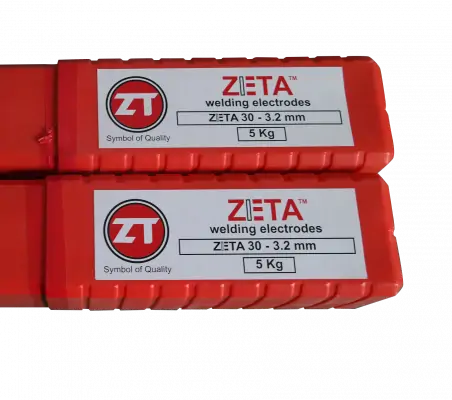
Use standard 6013 wire for all light joint repairs and daily fabrications. However, for mine hoist gantry construction equipment and palm oil mills that highly uphold durability, switch to E7018 heavy-load electrodes (Fully and purely available through the ZIETA Carbon Steel structural welding wire product line from the official distributor Thetaindo).